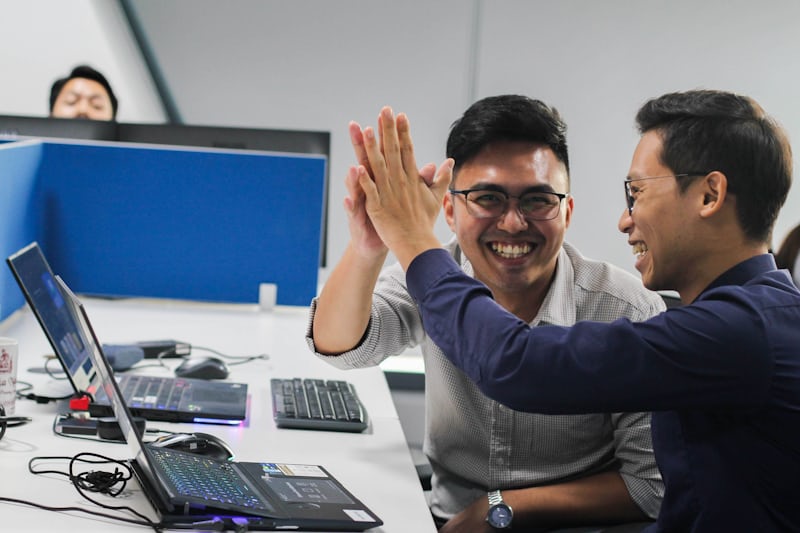
Mastering Interview Confidence: Top Strategies
Introduction
The ability to answer interview questions confidently is a crucial skill for job candidates aiming to make a lasting impression. This article delves into strategies and tips designed to boost your confidence and performance in interviews. Whether you're a first-time job seeker or an experienced professional, mastering the art of confident responses can significantly enhance your interview success.
Table of Contents
- Introduction
- Key Highlights
- Mastering Interview Confidence: Preparation Strategies
- Mastering Interview Confidence: Crafting Compelling Responses
- Mastering the Power of Body Language in Interviews
- Mastering the Art of Handling Difficult Interview Questions
- Mastering Post-Interview Reflection for Career Growth
- Conclusion
- FAQ
Key Highlights
-
Understanding the importance of preparation in boosting interview confidence.
-
Techniques for crafting compelling and self-assured responses.
-
The role of body language in conveying confidence.
-
How to handle difficult questions with poise.
-
Strategies for post-interview reflection and improvement.
Mastering Interview Confidence: Preparation Strategies

Entering an interview with a sense of confidence isn't just about showcasing your qualifications; it's about illustrating your readiness, adaptability, and fit for the role. At the core of this confidence lies thorough preparation. This section delves into how meticulous preparation forms the bedrock of a triumphant interview encounter, setting the stage for a display of confidence that can significantly enhance your chances of success.
Deep-Dive into Company and Role Research
Understanding the mission, values, and culture of the company, along with the specifics of the role you're vying for, is imperative. Here’s how to approach it:
-
Visit the company’s website: Start with their 'About Us' page to get a grasp of their mission and values. Check out their blog and recent news articles for the latest updates and projects.
-
Use LinkedIn: Explore the company's LinkedIn page. Look at their updates, and also check out the profiles of employees who currently hold or have held the position you're applying for.
-
Understand the role: Beyond the job description, try to understand what challenges this role might face and how it fits into the larger objectives of the company. This knowledge allows you to tailor your responses to demonstrate not just your fit for the role, but also your potential to contribute to the company’s goals.
-
Example: If applying for a marketing position at a tech startup, highlight your understanding of how your role supports the launch of a new product or service, and how it ties into the company’s mission to innovate.
Mastering Common Interview Questions
Anxiety in interviews often stems from fear of the unknown. Reducing this anxiety is possible through familiarization and practice. Focus on:
-
Reviewing common interview questions: Questions like 'Tell me about yourself,' 'Where do you see yourself in five years?' or 'What are your strengths and weaknesses?' are almost always asked. Prepare concise, genuine answers that reflect your experiences and ambitions.
-
Practicing your answers: Use tools like Pramp for free mock interviews or simply rehearse in front of a mirror. Record yourself to analyze your answers and delivery.
-
Feedback is crucial: Whether it's friends, family, or mentors, get someone to listen to your responses. Feedback helps refine not just what you say, but how you say it—ensuring your delivery is confident and clear.
Remember, the goal is not to memorize answers but to be comfortable with your narrative so that your responses feel natural and confident.
Leveraging the Power of Mock Interviews
Mock interviews are a critical step in your preparation, providing a safe space to test your interview readiness. Here's how to make the most of them:
-
Find a mock interview partner: This could be a mentor, a career coach, or even an online service. The key is to find someone who can provide professional, constructive feedback.
-
Simulate the interview environment: Try to mimic the actual interview setting. If it's a video interview, practice using the same technology (Zoom, Skype, etc.). Dress as you would for the interview to get into the right mindset.
-
Focus on feedback: The most valuable aspect of mock interviews is the feedback. Encourage your partner to critique not just your answers, but also your body language, eye contact, and any filler words you might use.
-
Iterate: Use the feedback to refine your answers and delivery. Repeat mock interviews as needed to continue improving.
Mock interviews help identify areas for improvement, reduce nerves by familiarizing you with the interview process, and ultimately, boost your confidence.
Mastering Interview Confidence: Crafting Compelling Responses

Delivering responses with confidence and impact is an art that can significantly sway your interview towards a positive outcome. In this section, we'll dive deep into strategies that will not only help you structure your answers effectively but also ensure they resonate with your interviewers.
Embracing the STAR Method for Impactful Answers
The STAR Method is a powerful tool for structuring answers to behavioral interview questions. It stands for:
- Situation: Set the scene with a specific example from your past.
- Task: Describe the responsibility or challenge you faced.
- Action: Explain the steps you took to address the task.
- Result: Share the outcome of your actions.
For instance, if asked about a time you led a project under a tight deadline, you might start by setting the scene (Situation), then describe the project's goal (Task), outline your approach to managing the team and resources (Action), and conclude with the project's successful on-time delivery (Result). This method not only keeps your answer focused and organized but also demonstrates your problem-solving and leadership skills in a concrete way.
Highlighting Strengths and Achievements with Finesse
When discussing your strengths and achievements, it's crucial to strike a balance between confidence and humility. Start by selecting accomplishments that are most relevant to the job you're applying for. Use quantifiable results to add credibility. For example:
-
Instead of saying, "I'm a great salesperson," specify, "I exceeded my sales targets by 20% for three consecutive quarters."
-
Incorporate feedback from others, such as, "My manager recognized me as the Employee of the Year for my dedication to client satisfaction."
This approach allows you to showcase your successes without appearing boastful. Remember, your goal is to make your strengths evident to the interviewer in a way that speaks to how you can add value to their team.
Turning Weaknesses and Failures into Opportunities
Addressing weaknesses and failures can be tricky, but it's also a chance to show your growth mindset. The key is to be genuine and strategic. For instance:
-
Choose a real weakness but one that is not a deal-breaker for the role. For example, "In the past, I found public speaking challenging..."
-
Immediately follow with what you've done to improve, such as, "...so I joined a local Toastmasters club to develop my skills. I've since led several presentations at industry conferences."
-
When discussing failures, focus on the lessons learned and how they've made you better. For example, "A project I led did not meet its initial deadlines, which taught me the importance of setting more realistic timelines and better contingency planning."
This honest yet positive framing showcases your ability to learn, adapt, and thrive in the face of challenges.
Mastering the Power of Body Language in Interviews

In the realm of interviews, your words are only part of the equation. Non-verbal cues, or body language, can significantly influence the impression you make on your interviewer. Mastering the art of body language can give you an edge, signaling confidence and professionalism without saying a word. This section delves into practical strategies for using body language to your advantage during interviews.
Maximizing Eye Contact for a Strong Connection
Maintaining eye contact is a powerful tool in establishing rapport and showcasing your attentiveness. It's a non-verbal way of saying, 'I'm engaged and interested in what you're saying.' Here are practical tips for making effective eye contact:
- Practice the 50/70 rule: During conversations, aim to maintain eye contact 50% of the time while speaking and 70% while listening. This balance conveys confidence and interest.
- Use the triangle technique: To avoid staring, visualize a triangle that alternates between the interviewer's eyes and mouth. Shift your gaze every 5 to 10 seconds for a natural interaction.
- Eye contact during handshakes: When you meet your interviewer, establish eye contact as you shake hands. This initial connection sets a positive tone for the interview.
Remember, too little eye contact can seem disinterested, while too much can be perceived as aggressive. Striking the right balance is key.
Adopting Confident Posture and Gestures
Your posture and gestures are silent yet eloquent speakers of your confidence. Adopting a posture that exudes assurance while using gestures effectively can enhance your message. Here's how:
- Sit and stand tall: Imagine a string pulling you up from the top of your head. This posture conveys confidence and readiness.
- Lean in slightly: Leaning towards your interviewer shows interest and engagement. However, respect personal space to avoid discomfort.
- Use gestures for emphasis: Hand movements can help emphasize points and convey enthusiasm. However, keep gestures controlled and within the frame of your body to avoid distraction.
Practicing these strategies in front of a mirror or recording yourself can provide valuable feedback for improvement. The goal is to appear confident, not rigid or over-rehearsed.
Leveraging Facial Expressions to Communicate Confidence
Facial expressions are a powerful component of your non-verbal arsenal, capable of conveying enthusiasm, confidence, and empathy. Here's how to use them to your advantage:
- Smile genuinely: A warm smile not only makes you appear approachable but also reflects positivity. Use your smile strategically, especially when greeting your interviewer and at the end of your interview.
- Express interest: Nodding slightly and showing expressions of interest (raising eyebrows, smiling) while the interviewer speaks demonstrates engagement.
- Practice mindfulness: Be aware of your resting face. Practicing a neutral, pleasant facial expression can ensure you don't unintentionally appear bored or disengaged.
Your facial expressions should complement your words, creating a harmonious message that resonates with your interviewer. Remember, authenticity is key; your facial expressions should reflect your true feelings.
Mastering the Art of Handling Difficult Interview Questions

Facing tough questions in an interview can feel like navigating a minefield. However, with the right strategies, you can turn these moments into opportunities to showcase your strengths and professionalism. This section delves into techniques for dealing with challenging inquiries, helping you maintain composure and confidence throughout the interview process.
Mastering the Pause Technique
The Pause Technique is a powerful tool in your interview arsenal. Instead of rushing into an answer, take a moment to breathe and collect your thoughts. This brief pause serves multiple purposes: it gives you time to formulate a thoughtful response and demonstrates your ability to handle pressure with grace.
For example, if asked, 'Describe a situation where you failed,' instead of diving into a potentially negative story, pause. Use this time to think about an experience that not only talks about failure but also highlights how you turned it into a learning opportunity. This shows your interviewer that you're reflective, resilient, and capable of growth. Remember, a well-timed pause can make the difference between a good answer and a great one.
Redirecting the Conversation Tactfully
When faced with a difficult question, redirecting the conversation towards your strengths can be an effective strategy. This doesn’t mean dodging the question but rather framing your response in a way that puts you in a positive light.
Imagine being asked about a skill you’re currently developing. Instead of admitting outright that you lack expertise, you could say, 'I’m in the process of enhancing my skills in XYZ, and here’s how I’m doing it…' followed by an example of a strength or achievement that’s relevant to the job. This approach not only addresses the question but also allows you to steer the conversation back to your strengths, keeping the focus on what you can offer.
Admitting When You Don't Know with Confidence
Admitting ignorance can be daunting, but it's a testament to your honesty and integrity. The key is to admit what you don’t know with confidence. If a question stumps you, it’s perfectly acceptable to say, 'That’s a great question. I don’t have direct experience with that, but I’m eager to learn and adapt.'
This response highlights your willingness to grow and your proactive attitude towards learning. It’s important to follow up by connecting your answer back to a relevant skill or experience that demonstrates your ability to overcome knowledge gaps. This not only shows humility but also underscores your commitment to professional development.
Mastering Post-Interview Reflection for Career Growth

The interview process doesn't end once you walk out of the meeting room. Reflecting on your performance is a pivotal step towards career progression, allowing you to fine-tune your approach for future opportunities. This section delves into practical strategies for post-interview analysis, ensuring you're equipped to capitalize on your experiences.
Effective Ways to Analyze Your Interview Performance
Identifying areas of strength and opportunities for improvement post-interview is more than a cursory self-assessment. It's about constructing a detailed analysis that paves the way for personal growth. Start by jotting down key moments of the interview while they're fresh in your mind. Consider the following:
- Specific questions that tripped you up and why.
- Moments you felt strong and confident – what led to these?
- Any feedback the interviewer provided, verbally or non-verbally.
For instance, if a question about your problem-solving skills caught you off guard, plan to incorporate relevant examples into your narratives for future interviews. Reflecting in this manner transforms each interview from a standalone event into a stepping stone for continuous improvement.
Seeking Constructive Feedback After Interviews
Approaching interviewers or recruiters for feedback can be daunting but is immensely beneficial. Here's how to tactfully seek out constructive criticism:
- Thank the interviewer for the opportunity, regardless of the outcome. Expressing gratitude opens the door to a positive dialogue.
- Frame your request for feedback in a way that shows your eagerness to learn and improve. For example, 'I'm always looking to enhance my interview skills. Could you share any observations or suggestions for improvement?'
- Be prepared for generic responses, but also be alert to any specific advice that can guide your development.
Remember, not all feedback will be actionable or even useful. The key is to extract what's relevant and use it to refine your approach. This guide on seeking feedback offers additional insights and strategies.
Planning Your Next Steps Post-Interview
Reflecting on your interview is crucial, but so is maintaining momentum for future opportunities. Implement these strategies to keep moving forward:
- Update your notes with insights gained from this interview experience.
- Identify skills or knowledge gaps that became apparent during the interview and outline a plan for addressing them.
- Network with professionals in your field to gain deeper industry insights and discover new opportunities.
By actively engaging in these steps, you're not just waiting for opportunities to come to you; you're creating them. This proactive approach ensures you're always ready for the next challenge, equipped with a richer understanding of your strengths and areas for improvement. For further guidance, explore resources like LinkedIn Learning for courses on interview skills and career development.
Conclusion
Mastering the art of answering interview questions confidently is a process that involves preparation, practice, and reflection. By employing the strategies discussed in this article, job candidates can enhance their interview performance and increase their chances of securing their desired position. Remember, confidence is not about having all the answers but about being prepared to engage with the questions in a thoughtful and assertive manner.
FAQ
Q: How can I prepare for an interview to boost my confidence?
A: Start by researching the company and role you're applying for to tailor your responses effectively. Practice common interview questions and consider engaging in mock interviews with friends or mentors to refine your technique and receive feedback.
Q: What is the STAR method and how can it help during an interview?
A: The STAR method stands for Situation, Task, Action, Result. It's a structured way of answering interview questions by outlining a specific situation, the task at hand, the action you took, and the result of your action. This method helps in crafting concise and compelling responses that showcase your problem-solving and critical thinking skills.
Q: How important is body language in an interview?
A: Body language is crucial in conveying confidence. Maintain eye contact to show attentiveness, adopt a posture that reflects confidence, and use gestures to emphasize points. Your facial expressions should convey enthusiasm and confidence, making a positive impression on the interviewer.
Q: How should I handle difficult questions in an interview?
A: Utilize the pause technique to collect your thoughts before responding. If faced with a question highlighting a weakness, redirect the conversation toward your strengths or how you've overcome past challenges. It's also acceptable to admit when you don't know something, as long as you frame it positively and express a willingness to learn.
Q: What should I do after the interview to improve for next time?
A: Reflect on your interview performance to identify strengths and areas for improvement. Consider seeking feedback from the interviewer or recruiter to gain insights into how you can enhance your future interview performance. Also, plan for your next steps, whether that's preparing for more interviews or further developing your skills.

 Leon
Leon